After our brief visit to the Treetops we headed north to the Samburu National reserve named after the local tribe. Samburu National Reserve was first established as a reserve in 1948 though there have been some modifications over the year. Its southern boundary is the Ewaso Ng'iro river which apparently is a Samburu word for muddy waters, at the time of our visit it was flowing pretty fiercely and I understand it washed away one of the camps on the south side shortly after we left. Thankfully we had a couple of nights here to get a bit of time to take a look around. I have split the photos into three groups with the birds at the top so if you don't want to see mammals or reptiles then you can skip them. However, I think this may be one of the longest blogs ever :)


The shot below does not capture the sheer power of this river but at least you can see why it is called muddy waters lol. Its one of the weird things about Africa is that despite this being on the south border of the reserve and the north border of another one, both parks were struggling from severe drought and large numbers of the animals are dying due to poor rainfall.
From a birding perspective this area had so many firsts for me and many have taken ages pouring over the guidebooks to try identify what I had seen, hopefully I got them all right.
I believe this little bird is a Chinspot Batis. It has a very short white supercillium and a grey head which is difficult to differentiate from the black face mask.
The White-Headed Mousebird seemed to love the area around the lodge although they were a little camera shy.
African Mourning Dove were fairly common about the area, especially close to the lodge.
Tawny Eagle were about in good numbers, I think I saw a dozen in the area. I am not certain but it may be due to the high number of weak and dying animals that has the numbers high.
Definitely doing well at the moment are the White Backed Vulture were about is big numbers
As were the Marabou Stork, another fairly large scavenger of the plains.
Pretty sure this is another Tawny Eagle, this is one of those species that has several different morphs ranging from quite dark to fairly light coloured.
All over the reserve were small flocks of the Yellow Necked Spurfowl, these guys were quite noisy for their size and were often heard calling first thing in the morning.
There were also a good number of Crested Francolin to be seen around the area, though not that easy to spot at times due to their excellent camouflage
There was a few small Flocks of Vulturine Guineafowl around the riverbank and around the reserve.
I only managed to get a fleeting shot of this bird but I believe it is a Water Thick-knee which are apparently fairly common in the area although I only saw this one. I am basing my ID on the grey patch on the wing.
A real thrill for me was spotting the third largest Owl in the world. Well if I am honest I was the last person on the bus to spot him, the Verreaux's Eagle Owl has very distinctive pink eyelids which can just be made out on this photo.
Standing proud on his perch is the Superb Starling which were very common everywhere we went.
I did not expect to find an old friend in the centre of Kenya, although there is not real reason they should not be about,
The Spur Winged Lapwing were quite common along the river as they were in Saudi Arabia at times.
And another bird I had not expected to see here was the Common Sandpiper, although again at this time of year they will be heading south.
As we toured around the reserve we came across this lovely Purple Roller (Rufous Crowned) which is a much more beautiful bird than this photo shows.
A couple of Egyptian Geese were wallowing around the riverbank
Close by the river I noticed a number of White-Browed Sparrow Weaver searching for food on the ground
The White Bellied Go-Away Bird so named because it sounds like its telling the observer to go away, a nice member of the turaco family.
The Black-Faced Sandgrouse is endemic to NE Africa and is apparently fairly common although I only managed to see this one on my travels in the area.
These Chestnut Sparrows are endemic to NE Africa and were pretty common around the hotel where they seemed to be nesting very successfully in the lodge thatched roofs. The female is quite colourful for a sparrow but not quite as striking as the male.
All over the site were weavers busily tending to nests. This is a Speckle-Fronted Weaver.
The Black Capped Social Weaver are endemic to the NE of Africa
But are found in large numbers attending to their nests around the reserve.
All over the reserve were small flocks of Helmeted Guineafowl darting about as the van passed.
The Crowned Lapwing were not so common around this park but saw a lot of them elsewhere on our trip.
I am looking into the ID of these and trying to get better photos but I am guessing some member of the Sparrow family. Will let you know.
Crowding the vultures space a little was a small flock of Fischer's Starling. Unfortunately the light was going a bit by the time I took this but hopefully you can see them well enough.
Not a great shot of a Fork Tailed Drongo which were pretty common around the park, although I was pretty unsuccessful at getting a photo of one.
Northern Red-Billed Hornbill were quite common around the reserve.
A bit less common were the Eastern Yellow Billed Hornbill (Male). These birds apparently pair for life and when either partner dies the other dies soon after.
Eastern Yellow Billed Hornbill (female)
Female Von Der Decken's Hornbill is endemic to NE Africa, the guide books say it is fairly common but we only managed to see this one.
A friend from my Saudi days was the Hoopoe which I only just managed to see as I was focussed on a Tawny Eagle which was just out of shot on the same tree. I also got some good sightings of a couple of Eastern Chanting Goshawk but never managed to catch them on film.
A couple of birds I am still trying to ID:
If you recognise any can you let me know, I will be chasing them up in the mean time :)
Mammals
My wife wanted to see some Elephants so our guide parked up beside a small area of bushes. Within minutes we had a mother and her young reaching over the car to get to the bushes behind. I must admit having watched some of the movies, I was a little concerned especially when the young one walked around the car and we were between the two, but it was unfounded, both were very placid and just behaved like we were not there.
Impala were about the place in good numbers, their lyre shaped horns being very distinctive.
We came across a place which was absolutely surrounded by cars and vans so went over to investigate. in the near distance was a single Cheetah who, despite the forest of lenses trained on it, only looked up once or twice but sent most of the time asleep.
Warthog were everywhere around the place sometimes in small groups.
We did not see all that many large animals in the park and indeed only spotted this one Zebra the entire time we were there. The drought had caused many to move or die. To our delight we discovered that this is a Grévy's zebra (
Equus grevyi) and is a pretty rare sight as they endangered and really only seen around this park and some places in central Ethiopia. Apparently this particular species is not generally seen in groups.
The area around the hotel was frequented by a troop of Baboons who sauntered through from time to time. They did not cause any real issues while we were there but have been know to be aggressive. It was a little disconcerting to discover when we were leaving that the hotel was not fenced and that they had security patrolling all night to watch for the more dangerous creatures :(
This is not a particularly good photo but was the only usable shot I got of a small family of Mongoose I managed to snap as we passed.
The Ground Squirrel were all around the hotel and popped in and out of their burrows throughout the day.
Now did you know that the difference between a monkey and an ape lies in the tail? Monkeys have, Apes don't apparently. I'm not sure that is totally accurate but was told that by one of the rangers at a reserve for Chimps run by Jane Goodall's foundation, but more of that anon. This little guy is one of a troop of about 35 animals we encountered on a safari on our last morning in the area. The Vervet Monkey is a pretty common sight about the area.
No prizes for guessing what this is. We did travel about the park for quite a while before we came across one but as with the London bus, when you see one you will a dozen and shortly after this we found about 10 others.
In one instance we came across a lioness with a very recent kill which was interesting but I'll save the photos as they are a little graphic.
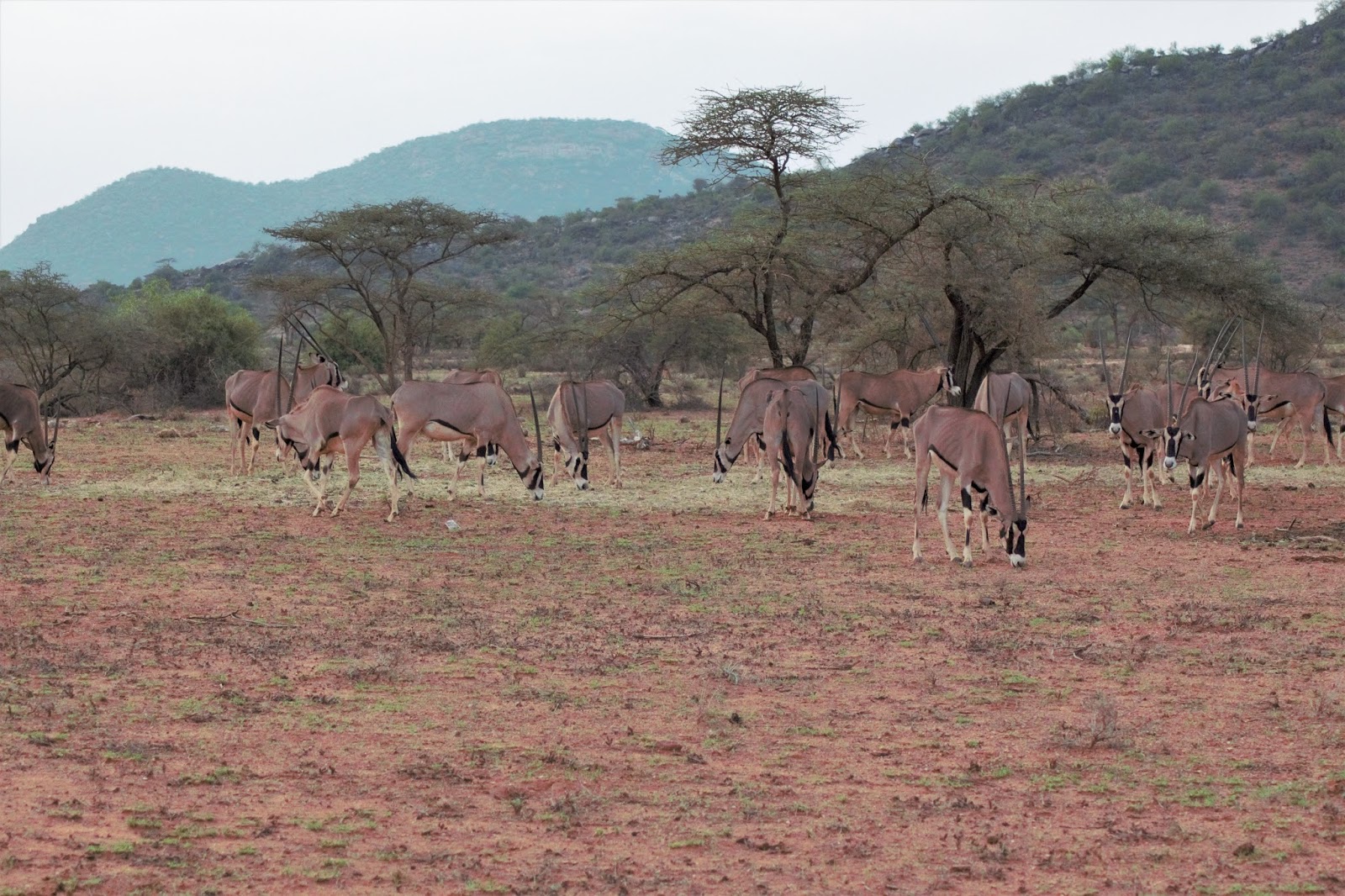
We also came across a small herd of East African Oryx trying to graze on the dry grass, as you can probably see they are not looking particularly healthy as there is very little food about.
This is a Reticulated Giraffe which occurs this region of Kenya, there are two other species, the Rothschild's and the Masai at least one of which we also saw but that's for a later blog. We spotted this one with a small herd of others in the northern half of the park.
One creature we were lucky to get good photos of was the African Hare which was along the roadside as we left the park. These are quite large and can live for up to 12 years. As with most hares they are very fast on their feet reaching up to 40mph when escaping a predator.
Some Reptiles.
Apart from the Crocodile I don't know what these two reptiles are but thought I would include them as their colours are amazing.
We left the Samburu park after visiting a Samburu tribe village which was interesting but a little contrived. I guess you can't blame them for getting a few shillings from the tourists where they can.
This was an amazing place to visit and I would happily go back there for a longer stay if I ever get the chance. From here we moved to a larger reserve on the side of Mount Kenya which will be the subject of another blog.
© Bernard Bracken