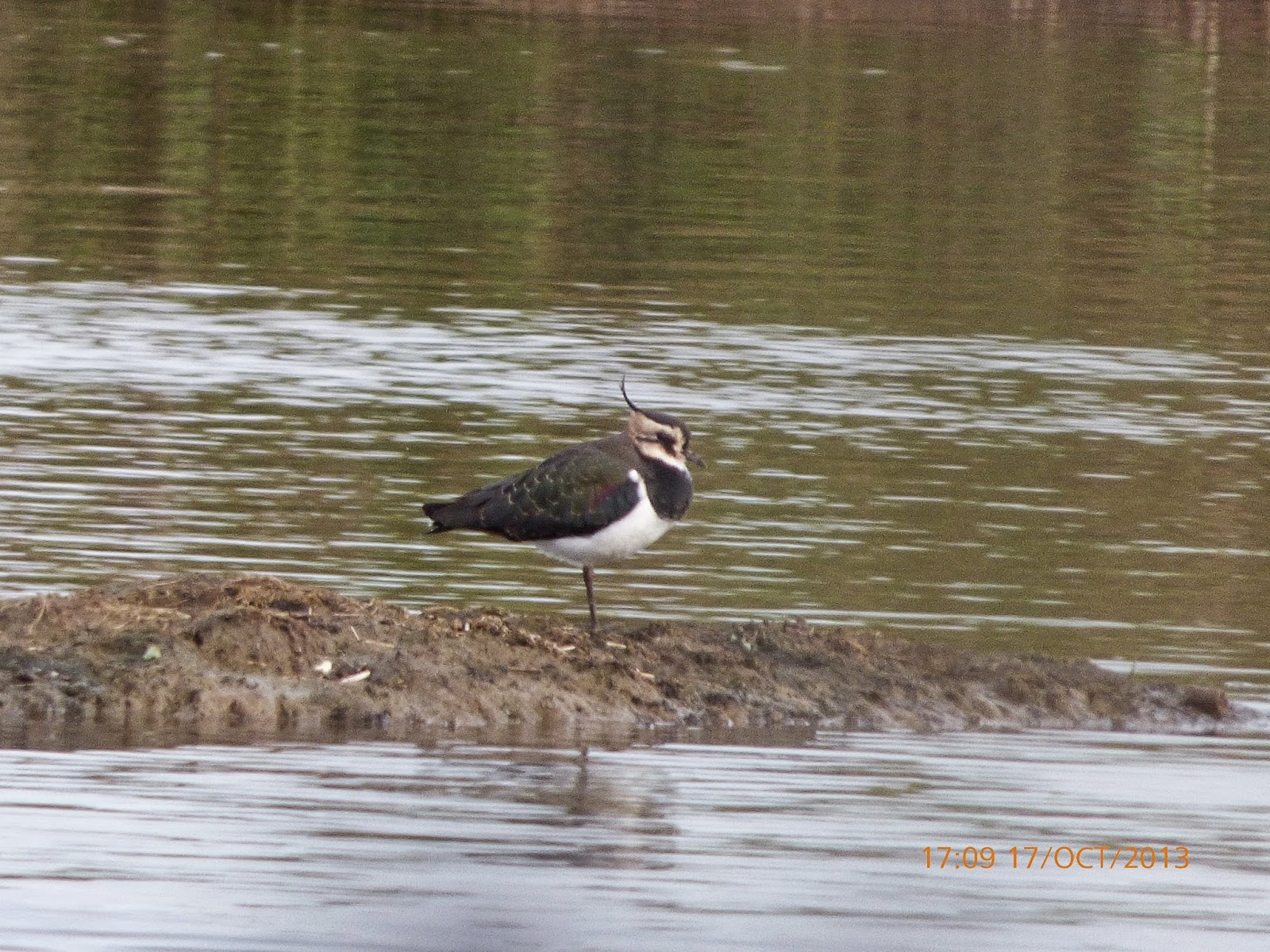
This week was definitely a good one with flocks of Weavers and Cattle Egret and a host of other delights. The farmer was harvesting in the field furthest from my start point and the bird activity was intense with a couple of flocks of weavers and Cattle Egret seen.
_edited.jpg) |
| little egret (Egretta garzetta) |
_edited.jpg) |
| Cattle Egret (Bubulcus ibis) |
A rough count from the picture comes out at about 250, easily the most I have ever seen in one flock .
The family of Moorhen were still in the same area, though a little more camera shy than before;
 |
| common moorhen (Gallinula chloropus) |
A little further along I heard a familiar call but at first could not see what it was. But then noticed a little blue head peering from behind a bush. Our Common Kingfisher had returned from his travels and this time I think he brought a friend._edited.jpg) |
| common kingfisher (Alcedo atthis) playing hide and seek! |
_edited.jpg) |
| common kingfisher (Alcedo atthis) |
A little further along I saw a close relative of these guys the White Throated Kingfisher, and this one definitely did have a friend.
 |
| white-throated kingfisher (Halcyon smyrnensis) |
There were four of these in all around the area, one at the far end of the first field, then these two guys and then one in the field on the opposite side of the road. I will be watching these to see if any of them have become resident.
Spotted my first White (pied) Wagtail of the season today, it was searching for food in the dirt and did not notice me much until I was nearly on it.
_edited.jpg) |
| white wagtail (Motacilla alba) |
While I was looking into an area of reeds from a sandy mound four Purple heron flew by. Oddly the moment the lead one spotted me he turned, did a full circle around me and then flew on alongside his comrades. Definitely looking to see what this strange creature was getting up to.
_edited.jpg) |
| purple heron (Ardea purpurea) |
As I got closer to the road the number of Bee Eaters increased. These are Little Green Bee Eaters of which there were a good number this week.
_edited.jpg) |
| green bee-eater (Merops orientalis) |
They love to perch on objects like the sprinklers and watch for their prey. Once spotted they shoot off in a wide circle, catch the prey and land back more or less where they started.
_edited.jpg) |
| green bee-eater (Merops orientalis) |
_edited.jpg) |
| marsh harrier (Circus aeruginosus) |
She landed in the grass a bit further back in the direction I had just come from and unfortunately directly into the sun so only really got this shot but it was quite exciting, maybe not for that dove sitting on the sprinkler but it was for me! Tell you what, they are a big bird seen reasonably close up.
Another few meters along the path I found a pair of Common Myna feeding in the grassy verge.
 |
| common myna (Acridotheres tristis) |
Also a pair of Desert Wheatear ??? feeding among the bushes and grasses.

As I crossed the road two things caught my eye immediately.
The first was a small group of Barn Swallow doing a lot of low passes over some short grass. I decided I would give it a go at taking some photos. Don't laugh, some day I'll get it but here is one. Your not seeing the others!
_edited.jpg) |
| barn swallow (Hirundo rustica) |
The second was the following sight out in the field.
_edited.jpg) |
| streaked weaver (Ploceus manyar) |
 |
| streaked weaver (Ploceus manyar) |
They moved like a murmuration of starlings taking off en-mass and flying in one direction, then the next almost in unison, and creating a terrible racket. As I got a bit closer I managed to get a couple of pics of a few of them close up. Streaked weavers. I subsequently took the picture and counted as many as I could losing count at 783.
As I passed along the reed beds I saw a clump of reeds moving about a lot so decided to wait to see if the culprit showed himself. After a short while he emerged for a few seconds and I managed to get a single shot. The Great Reed Warbler is a first for me, I did try to get another couple of photos but in typical warbler fashion he bounced about too much and eventually disappeared back into the reeds.
 |
| great reed warbler (Acrocephalus arundinaceus) |
My thanks to Rob Tovey and our friends on Bird Forum for assistance with the ID.
All along there was the usual calls of the Graceful Prinia which are everywhere and very noisy, although difficult to photograph because of that same warbler behaviour I was speaking of above, constant fast and jerky movement gives the camera a hernia. However, I did get one reasonable photo;
_edited.jpg) |
| graceful prinia (Prinia gracilis) |
Interestingly on this side of the road the predominant Bee Eater was not the Little Green but the Blue Cheeked Bee Eater, which like their cousins were lined up on the sprinklers watching for prey.
 |
| blue-cheeked bee-eater (Merops persicus) |
At the opposite side of the field were some more Marsh Harriers which perched for a long time surveying the scene around them, but eventually taking flight.
 |
| marsh harrier (Circus aeruginosus) |
 |
| marsh harrier (Circus aeruginosus) |
While a single Purple Heron watched the scene from a high tree perch.
 |
| purple heron (Ardea purpurea) |
All around were the usual gatherings of Laughing Dove, sparrows and a good number of Namaqua Doves, all seemed very skittish taking off well before I got any where near close to them, but then there were a lot of raptors about today.
 |
| Namaqua dove (Oena capensis) |
On my walk back to the car I saw what looked like a short aerial battle between a Laughing Dove and a Kestrel. It was all done and dusted in an instant and amazing to watch. The Kestrel did not win out this time to be honest I think he may have been pushing it a bit as this was a fairly large prey item for him to attempt. But then again he may have been diving down for a mouse or something and caused the dove to scatter.
Out in the grass there was a good deal of singing from the Crested Larks which occasionally could be seen flying along the top of the vegetation before darting into it to forage. I got a quick shot of this one as it stood singing on top of an old pipe.
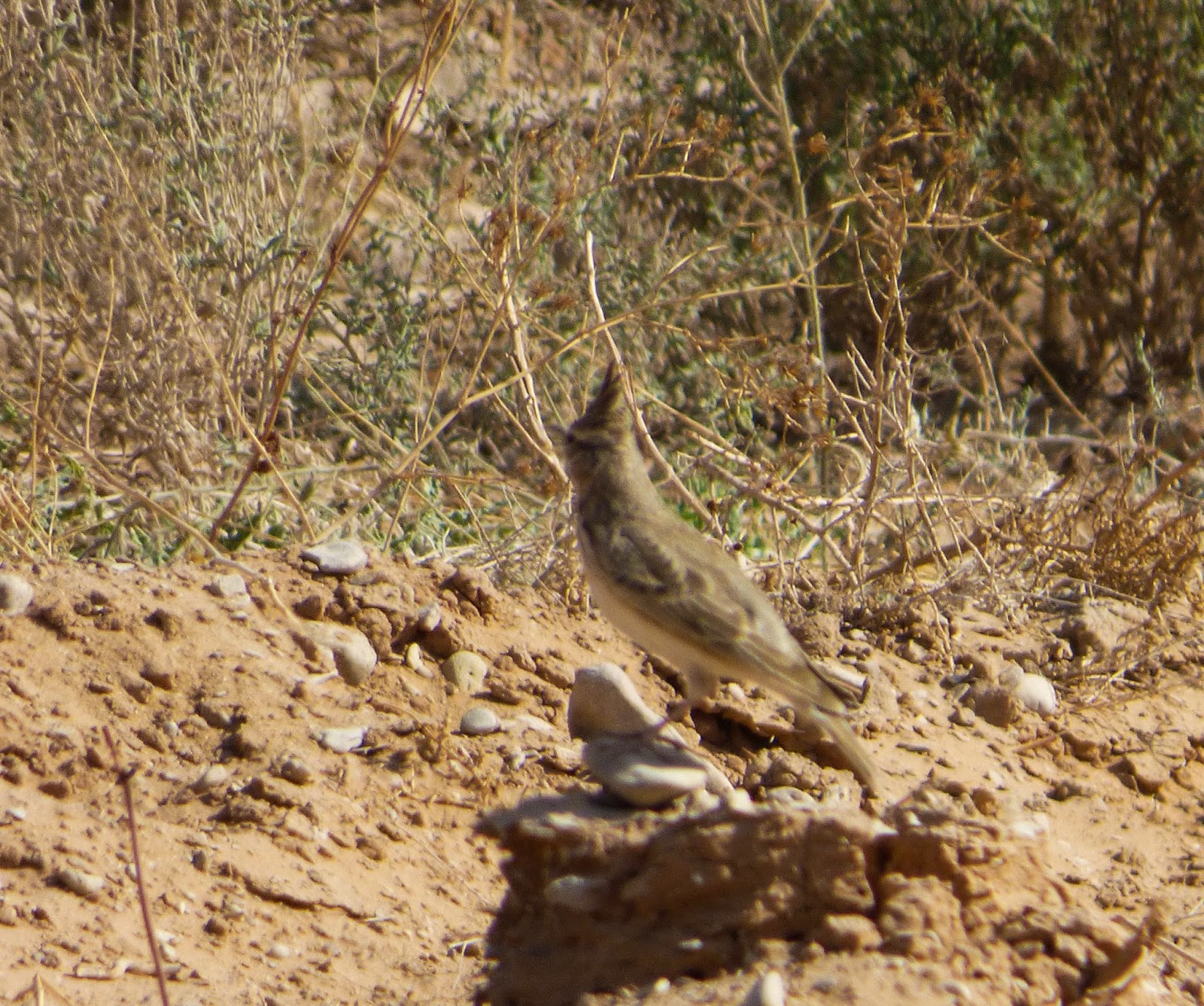 |
| crested lark (Galerida cristata) |
All around the bushes were small groups of Silverbill, these were all in small groups today when often they are seen in flocks, another curiosity for me.
 |
| Indian silverbill or white-throated munia (Lonchura malabarica) |
A fairly high number of Shrikes were also noticed during this walk, I assume they were attracted to the area by the large numbers of small birds about today. All Daurian and Turkestan from what I can see;
_edited.jpg) |
| Daurian shrike (Lanius isabellinus) |
A durian above I think and a couple of young Turkestan Shrikes below.

 |
| isabelline shrike (Lanius isabellinus) |
And as I finished for the day I spotted this little chap perched on the bush. A rather fine upstanding Gent don't you think.
 |
| isabelline wheatear (Oenanthe isabellina)
|
Species List
|
Species
|
Count
|
Species
|
Count
|
|
Mallard
|
4
|
Rock Dove
|
4
|
|
Grey Heron
|
1
|
Laughing Dove
|
25
|
|
Purple Heron
|
6
|
Namaqua Dove
|
15
|
|
Little Egret
|
1
|
Common Kingfisher
|
2
|
|
Cattle Egret
|
250
|
White Throated
Kingfisher
|
4
|
|
Western Marsh
Harrier
|
4
|
Green Bee Eater
|
7
|
|
Common Moorhen
|
6
|
Blue Cheeked Bee
Eater
|
6
|
|
Common Kestrel
|
1
|
Daurian Shrike
|
2
|
|
Crested Lark
|
4
|
Pale Craig Martin
|
8
|
|
Barn Swallow
|
20
|
White Eared Bulbul
|
8
|
|
Great Reed Warbler
|
1
|
Graceful Prinia
|
10
|
|
Black Scrub Robin
|
1
|
Siberian Stonechat
|
2
|
|
Desert Wheatear
|
2
|
Common Myna
|
2
|
|
White Wagtail
|
2
|
House Sparrow
|
6
|
|
Arabian Golden
Sparrow
|
6
|
Spanish Sparrow
|
4
|
|
Streaked Weaver
|
789
|
Red Avadavat
|
1
|
|
Indian Silverbill
|
14
|
|
|
|
|
|
|
|